
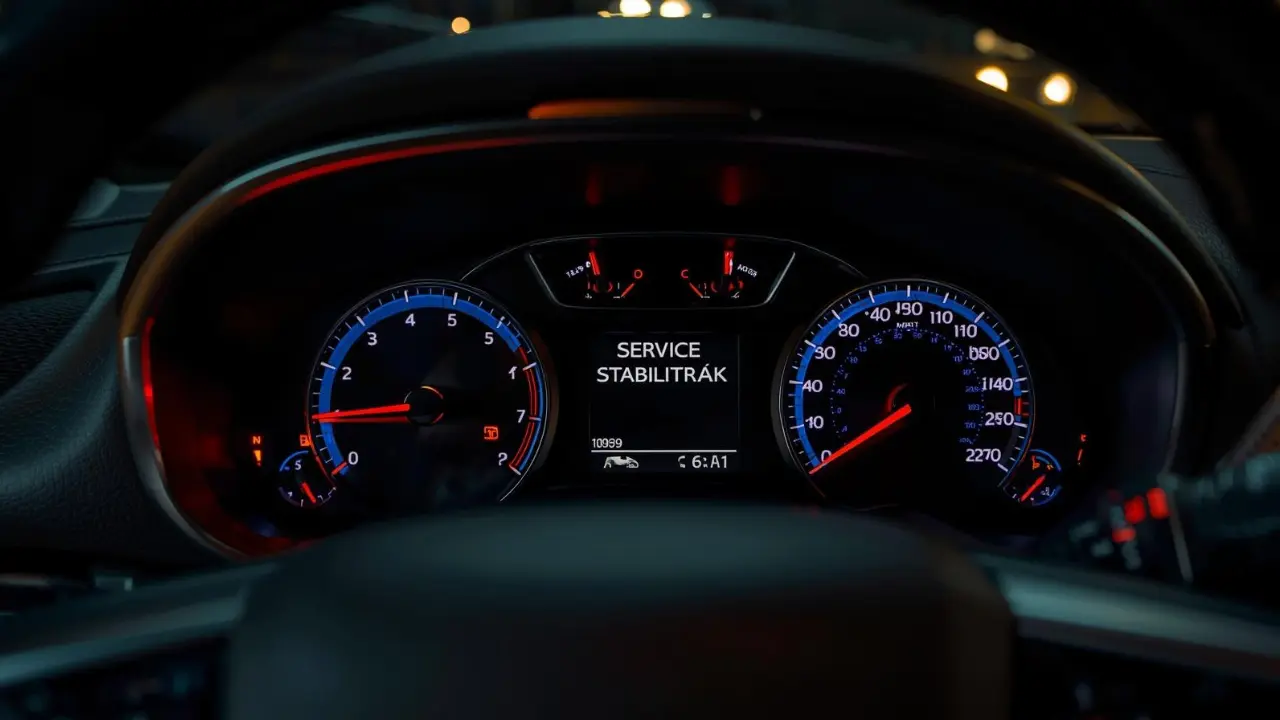
You’re driving normally when a warning suddenly shows up on your dashboard: “Service StabiliTrak.”There’s no noise, no smoke, and the car seems fine—but the message is enough to make anyone concerned.
This warning matters because StabiliTrak helps keep your vehicle stable and under control, especially during sharp turns, sudden steering, or slippery road conditions. When something goes wrong with this system, drivers often wonder: Is it safe to keep driving? Is this a serious problem? Or could it be a small sensor issue?
Let’s make it simple. Below, you’ll find a clear and practical explanation of what StabiliTrak is, what the Service StabiliTrak warning means, why it appears, and which issues usually need attention—without confusing technical terms.
What Is StabiliTrak and Why It Exists in Modern Cars
The basic idea of StabiliTrak, in simple terms
StabiliTrak is an electronic stability control system. Its job is to help keep your vehicle going in the direction you intend, especially when road conditions or sudden movements could cause a skid or loss of control.
In real use, it’s like a silent helper. You don’t notice it until something goes wrong—then it steps in.
Which car brands use StabiliTrak
StabiliTrak is mainly used in General Motors vehicles, including:
- Chevrolet
- GMC
- Cadillac
- Buick
Other manufacturers use similar systems but call them different names.
StabiliTrak vs traction control vs ABS
These systems work together but do different things:
- ABS prevents wheels from locking during braking
- Traction control limits wheel spin during acceleration
- StabiliTrak corrects steering and stability during turns
StabiliTrak is the “big picture” system that uses the other two to keep the car stable.
Real situations where StabiliTrak activates
From experience, StabiliTrak usually kicks in when:
- You turn sharply at higher speed
- One side of the car hits ice or water
- You swerve to avoid something suddenly
You may feel light braking or reduced engine power for a moment. That’s normal.
What problems StabiliTrak is designed to prevent
- Skidding during turns
- Oversteering or understeering
- Loss of control on wet or icy roads
How the StabiliTrak System Works Behind the Scenes
Sensors that make StabiliTrak work
StabiliTrak depends on several sensors working together.
Wheel speed sensors
These monitor how fast each wheel is spinning.
Steering angle sensor
This tells the system where you want the car to go.
Yaw and lateral sensors
They detect sideways movement and rotation.
How braking and engine systems are involved
When the system senses a problem, it can:
- Apply brakes to specific wheels
- Reduce engine power briefly
This all happens automatically, often in less than a second.
What happens when control is lost
If the car starts sliding differently than your steering input, StabiliTrak corrects it. You may feel slight braking or a brief hesitation in acceleration.
When StabiliTrak turns on by itself
It activates only when needed. Otherwise, it stays in the background.
What Does “Service StabiliTrak” Mean?
The real meaning of the message
“Service StabiliTrak” means the system has detected a fault and may not work properly. It does not mean the system is actively helping you—it means it can’t.
Warning message vs system activation
- Flashing or active light: system is working
- Service message: system has a problem
This difference matters a lot.
Why it appears suddenly
Common reasons include:
- Sensor failure
- Weak battery
- ABS-related issues
- Wiring problems
Sometimes it shows up after starting the car or hitting a bump.
Is it an error or a precaution?
Most of the time, it’s a precaution triggered by a stored fault code.
Common misunderstandings
Many drivers think it’s safe to ignore because the car still drives. That’s risky, especially in bad weather.
StabiliTrak Light On — What Your Car Is Telling You
Types of warning lights
You may see:
- “Service StabiliTrak” text
- Stability control icon
- Traction control warning
Solid light vs flashing light
- Flashing: system is working
- Solid: system is disabled or has a fault
When the light turns off on its own
Sometimes it resets after restarting, but that doesn’t mean the issue is gone.
When it should never be ignored
If the light stays on for multiple trips, it needs attention.
Most Common Causes of StabiliTrak Problems
Faulty wheel speed sensors
These are the most common cause, especially in older vehicles.
Steering angle sensor issues
If the sensor loses calibration, the system gets confused.
Weak or failing battery
This surprises many people. Low voltage can trigger stability warnings.
ABS module or wiring problems
Since StabiliTrak relies on ABS, issues here affect both systems.
Road conditions vs real failure
Snow, mud, or loose gravel can cause temporary warnings—but they should clear quickly.
After tire changes or alignment
Improper calibration can trigger errors.
Is It Safe to Drive with Service StabiliTrak On?
Short trips vs long trips
Short, careful driving is usually possible. Long trips increase risk.
Driving in rain or snow
This is where it becomes dangerous. Stability control matters most in poor conditions.
Effects on braking and handling
ABS may still work, but stability correction may not.
When you should stop driving
- Multiple warning lights
- ABS also disabled
- Car feels unstable
How to Fix Service StabiliTrak
Checks you can do first
Restart the vehicle
Sometimes clears temporary faults.
Check the battery
Low voltage causes many false warnings.
Inspect wheel sensors
Look for dirt or damage if accessible.
Diagnostic scan and error codes
A scan tool identifies the exact fault. Guessing wastes money.
Replacement vs recalibration
Some sensors need replacement. Others only need recalibration.
When professional repair is needed
Electrical faults and ABS module issues should be handled by a technician.
Cost to Repair StabiliTrak Issues
Diagnostic costs
Usually modest and worth it.
Sensor replacement costs
Wheel sensors are often affordable compared to major repairs.
ABS module repair
This can be expensive and should be properly diagnosed.
Warranty coverage
Some repairs may be covered, depending on age and mileage.
Why ignoring it costs more later
Small sensor issues can lead to larger system failures.
Can You Reset the StabiliTrak System?
Temporary resets vs real fixes
Resets don’t repair broken parts.
Manual reset methods
Disconnecting the battery may clear the light briefly.
Why resets fail
The fault returns as soon as the system detects the issue again.
Risks of repeated resets
You lose trust in warnings that actually matter.
StabiliTrak Problems by Vehicle Type
Chevy vehicles
Sensor-related issues are common.
GMC trucks
Higher stress on sensors due to weight and use.
SUVs vs sedans
SUVs see more stability warnings due to higher center of gravity.
High-mileage vehicles
Age and wear make sensor failures more likely.
Common Mistakes Drivers Make
- Ignoring warnings too long
- Replacing parts without diagnostics
- Confusing traction control with StabiliTrak
- Trusting online “quick fixes”
Conclusion
StabiliTrak is one of those systems you don’t think about—until it stops working. When a Service StabiliTrak warning appears, it’s your car saying the safety net may be gone.
Most issues are manageable when caught early. The smart move is simple: understand the warning, diagnose the cause, and fix what’s actually broken. That approach keeps you safer and saves money in the long run.
FAQs
Q1. What does Service StabiliTrak mean on a Chevy?
It means the stability control system has detected a fault and may not function properly.
Q2. Can I drive with the StabiliTrak light on?
You can, but stability support may be disabled, especially risky in poor weather.
Q3. Does StabiliTrak affect braking?
It works with ABS but doesn’t replace normal braking.
Q4. How much does it cost to fix StabiliTrak?
Costs vary widely, depending on whether it’s a sensor, wiring, or module issue.
Q5. Can a bad battery cause the Service StabiliTrak warning?
Yes. Low voltage is a very common trigger.
Q6. Will resetting StabiliTrak fix the problem?
Only temporarily, if at all. The underlying issue usually remains.
