
Inventory Management Software has become a critical tool for businesses of all sizes in today’s fast-paced and highly competitive market. Whether a company operates in retail, manufacturing, or e-commerce, managing inventory efficiently can directly impact profitability, customer satisfaction, and operational success. Traditionally, inventory was tracked manually using spreadsheets or paper-based systems, which often led to errors, delays, and inefficiencies. With the rise of digital solutions, businesses now rely on advanced software systems to automate and optimize inventory processes.
Importance of Inventory Control in Modern Business
Effective inventory control ensures that a business always has the right products available at the right time without overstocking or understocking. Overstocking ties up capital and increases storage costs, while understocking can lead to missed sales opportunities and dissatisfied customers. Inventory Management Software helps strike the perfect balance by providing real-time visibility into stock levels, enabling businesses to make informed decisions. This level of control is especially important in industries with high demand fluctuations or perishable goods.
Key Features of Inventory Management Software
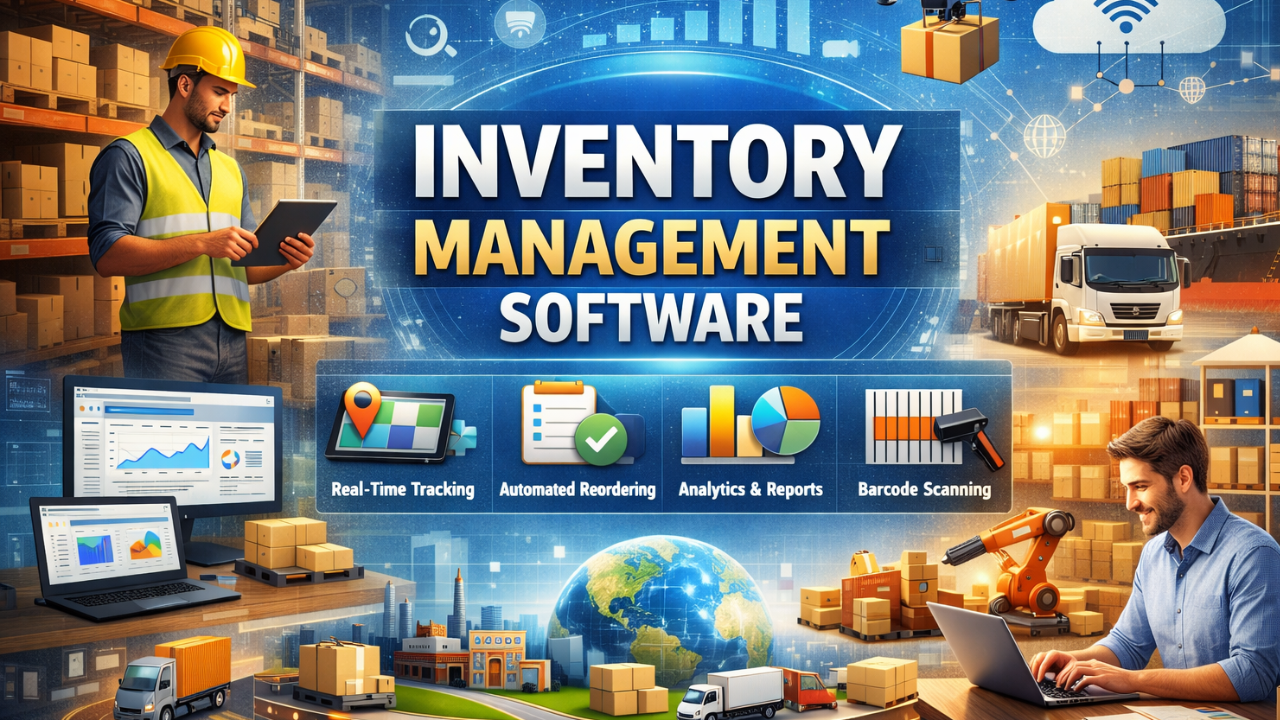
Modern Inventory Management Software offers a wide range of features designed to streamline operations. One of the most important features is real-time tracking, which allows businesses to monitor stock levels across multiple locations instantly. Another essential feature is automated reordering, where the system generates purchase orders when stock reaches a predefined threshold. Reporting and analytics tools provide insights into sales trends, inventory turnover, and demand forecasting. Barcode scanning and integration with other systems such as accounting and sales platforms further enhance efficiency and accuracy.
Benefits of Using Inventory Management Software
Implementing Inventory Management Software offers numerous benefits. It significantly reduces human error by automating data entry and calculations. This leads to more accurate inventory records and better decision-making. The software also improves operational efficiency by saving time and reducing manual workload. Businesses can respond quickly to market changes, optimize stock levels, and minimize waste. Additionally, improved inventory visibility enhances customer satisfaction by ensuring timely order fulfillment and reducing delays.
Role in Supply Chain Optimization
Inventory Management Software plays a crucial role in optimizing the supply chain. It helps businesses coordinate with suppliers, track shipments, and manage warehouse operations more effectively. By providing real-time data, the software enables better communication between different stages of the supply chain. This leads to faster delivery times, reduced lead times, and improved overall efficiency. Companies can also identify bottlenecks and address them proactively, ensuring a smooth flow of goods from suppliers to customers.
Impact on Small and Medium Enterprises
For small and medium enterprises (SMEs), Inventory Management Software can be a game-changer. These businesses often operate with limited resources and cannot afford inefficiencies. By adopting inventory software, SMEs can compete with larger companies by improving accuracy, reducing costs, and enhancing customer service. Cloud-based solutions have made it more accessible and affordable for smaller businesses to implement advanced inventory systems without significant upfront investment.
Integration with Other Business Systems
One of the major advantages of Inventory Management Software is its ability to integrate with other business systems such as accounting software, customer relationship management (CRM), and e-commerce platforms. This integration ensures seamless data flow across different departments, reducing duplication and improving accuracy. For example, when a sale is made, the inventory is automatically updated, and the accounting system records the transaction. This level of automation enhances productivity and provides a unified view of business operations.
Challenges in Implementation
Despite its many benefits, implementing Inventory Management Software can present certain challenges. Businesses may face difficulties in selecting the right software that meets their specific needs. The initial setup process, including data migration and system configuration, can be time-consuming. Training employees to use the new system effectively is another critical factor. Resistance to change and lack of technical expertise can also hinder successful implementation. However, with proper planning and support, these challenges can be overcome.
Future Trends in Inventory Management Software
The future of Inventory Management Software is shaped by emerging technologies such as artificial intelligence (AI), machine learning, and the Internet of Things (IoT). AI-powered systems can analyze large volumes of data to predict demand patterns and optimize inventory levels. IoT devices enable real-time tracking of goods throughout the supply chain, providing greater visibility and control. Automation and robotics are also transforming warehouse operations, making them more efficient and cost-effective. As technology continues to evolve, inventory management systems will become even more sophisticated and intelligent.
Conclusion
Inventory Management Software is no longer a luxury but a necessity for businesses aiming to stay competitive in today’s dynamic market environment. It offers a comprehensive solution for managing inventory efficiently, reducing costs, and improving customer satisfaction. By leveraging advanced features and integrating with other business systems, companies can streamline operations and achieve greater success. Although implementation may come with challenges, the long-term benefits far outweigh the initial efforts. As technology continues to advance, Inventory Management Software will play an even more vital role in shaping the future of business operations.
